Author of the suspenseful, paranormal romances in my Stranger Creatures series. Also writing poetry, science fiction, and fiction. Sharing info about new book releases by different authors, poems, contests, and more
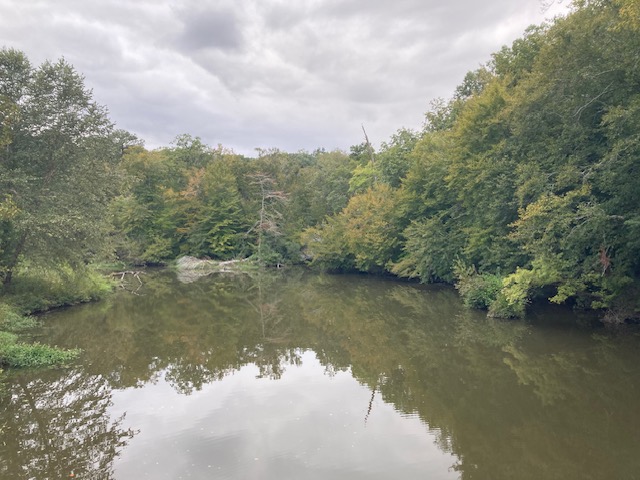
Image description – a small stream surrounded by trees at Pocahantas park. The later afternoon sky is overcast, and the water is muddy yet still offers a clear reflection of the surrounding trees and sky above.
Today I looked at the news again (instead of hiding inside a heavily warded blanket fort of ignorance) and damn, the giant rock we live on just continues to roll downhill towards a pit full of scorpions, broken glass, credit scores, and other such miseries. Despite having an ample number of empty houses in existence and the means to grow the food supply in relatively safe ways, those who believe themselves to be the unequivocal authorities over all that they see have chosen to hold everything behind a paywall. The lock only turns for those within the groups that don’t really need anything but want more than they can ever reasonably use.
Unlike the hopeful vision of the future proposed in Star Trek, the current reality is that technological advancements and their capabilities will not be used to benefit you or me. Cities have begun mounting a i cameras on the back of trash trucks, not with the intent to keep the drivers safe, but instead, to search for code violations in homes in areas where people have limited ability to pay useless fines. Municipality revenue-generating cameras on trash trucks was not the story I wanted to read today. Or tomorrow. Or ever, really. But if I choose to stay awake and aware, then I have to hear some absurdity or another, every single day. The price of knowing these things is anger that burns, constantly, to some degree, in every facet of my being.
I just wanted to go outside and enjoy the parks and beaches, and to be left alone and enjoy my privacy. But the forests are all being torn down to make way for ugly gray warehouses that drink all the water and breathe smoke into our air. Data center parks and data center villages replaced all the trees, but “no worries,” we’re told, we can still look up digital images of forests. A sacrifice for the greater good. I can’t figure out what’s great about it, though.
Robot eyes in the skies assist our phones in spying on our words and purchases. Companies line up to pay for the consumer data, because we’re just numbers with wallets to be exploited, and that’s not even the worst use of our information. The electronic spies report our habits to programs designed to fleece the people bare before the billionaires create their dream of an everlasting winter, leaving us no option but to trade years of our futures for the chance to survive the manufactured cold for a little while longer.
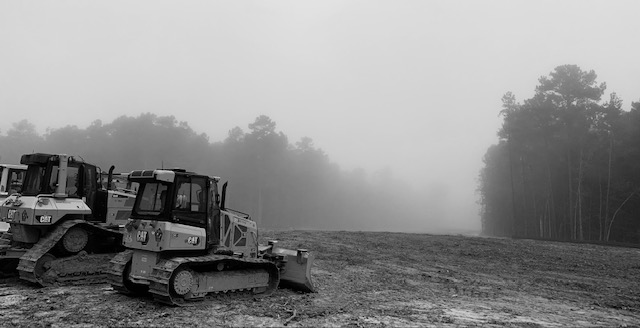
Image description – a photo of part of a forest that has been destroyed in preparation for a building project that will overtake land once filled by old trees and streams. A piece of destruction equipment sits behind a path in a wooded area that has been cleared of trees.
At the moment, nowhere feels safe from the imminent threat of data centers and overdevelopment. Beautiful, old trees and creeks and streams are being destroyed at an alarming rate to make way for things corporate overlords are trying to convince us that we need. City and county planners know that people don’t want these monstrosities but somehow, approval gets pushed through. Money has a lot to do with that process, I’m sure.
Money and greed play a large role in overdevelopment of land without proper infrastructure to withstand all the new homes and businesses. The money, though, is something most of us will never see. We work and pay taxes, and yet, those in political power seem determined to keep the majority of the money paid into the system for themselves. They toss the majority of us mere scraps and tell us to work harder, blaming us for their hoarding of resources that should have been shared. Sharing money was the original agreement, the promise, after all.
Taxes were meant to be shared for things that benefit us all. Data centers are the personification of greed and hoarding behavior. The centers collect our personal data, to be utilized in ways that maximize profits for the corporate overlords. The centers drink massive amounts of water and drain the power grid, offering us common people nothing in return, and yet, the hideous warehouses are multiplying everywhere, because the uber wealthy benefit from these monstrosities.
The monoliths that seek to box people into a perimeter of ever-dwindling opportunity must fall to make way for a system that benefits the land and allows people to thrive instead of living under the constant threat of manufactured scarcity.
Keep reading for the two possible endings to this poem
Ending 1 –
Past the threshold
no trail awaits
The stars can’t breach the canopy of leaves
A chorus of vines wrap around me
I’m a present for everything that stings
Venom lessons leach into blood, muscle, and bone,
Wolves wait and rabbits
scream
Over the crickets’ wicked laugh
I hear the stream
whispering
that the forest doesn’t go on forever
The music is gone
so I write my own
Ending 2-
When I cross the threshold
leaves swallow me, doing their best to hide me
from things that steal and sting
Whisper of the stream
guides me
off the path
through briars that cut into my leaves
piercing muscle, clawing at hope
but the sound still calls
I hide from spiders and walk with snakes
through the rain
over places where the earth
split
Stars and fireflies stay true
And the night’s butterfly takes me through the last miles
to the heart
the symphony
the beginning
of everything
Image description – a photo of somewhat barren trees at the edge of a forest. The sky is overcast, and a layer of fog gives the trees a hazy appearance.
Why two endings for the poem?
After I wrote the beginning of the poem, I started thinking of two possible endings- one more sinister and one with a more joyous outcome. I remembered reading those Choose Your Own Adventure books when I was a kid and thought, why not have two endings to this poem?
A song, a promise, a path- hidden except for the first few steps- could be a trap, waiting to ensnare any who dare to enter. Will the price to move past the trees be cuts so deep that souls and bones need to be pulled back together with a needle and thread? Or is the hint of the hauntingly beautiful song a prelude to something wonderful?
The threads binding our souls and bones remember the agony of past lessons, yet the stitches come alive with curiosity. In stillness we dissolve. Beyond the tree line, we find reasons.
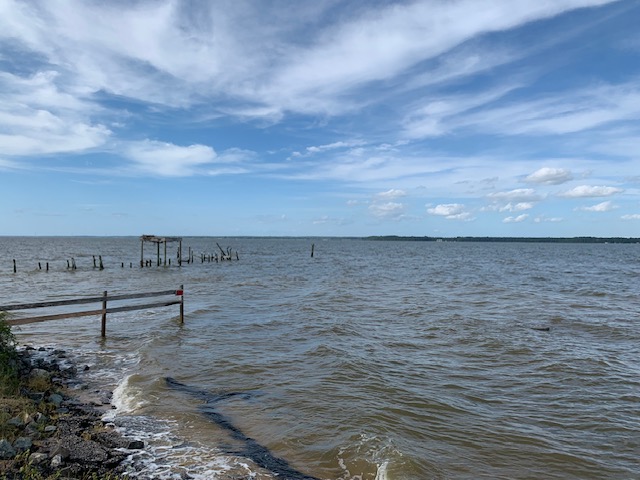
Image description – A photograph of a narrow, winding section of the James River surrounded by trees on a sunny, spring afternoon
About the poem – Corporations have been given the rights (for the right price, paid to hungry politicians) to bottle up water from waterbodies that people depend on, both in the United States and in other countries. These soulless corporations then sell the bottled water to the people whose streams and rivers the corporations have claimed. There are so many short-term profit tactics that involve destroying water and land for temporary gain. Politicians who allow the land to be polluted and destroyed are often working under the assumption that the aftereffects won’t catch up to them in their lifetime. They assume that they will always live in the protected, fortunate areas where such things don’t occur.
The earth can’t protect itself from shareholders and CEOs or from smiling lawmakers bent on getting kickbacks for passing along environmental destruction laws, all so they can send their kids to the good schools and have summer homes by the river (in the sections the corporations can’t touch, of course), so we have to respect and protect the earth.
Earth Day is a chance to remember and appreciate all the beautiful parks and natural landmarks, but it’s also a reminder that we need to be active in the fight to preserve them.
Image description – photograph of a desolate dirt road beneath a foggy sky.
This is my first attempt at a lune poem (three words/five words/three words version). Origins of a Ghost Story was inspired by the ever-present problem of corporations and real estate developers overtaking a terrifying amount of natural land. The consequences are devastating to the environment but not to the corporate entities and shareholders who bring about the destruction. They have no reason or requirement to care about what they’ve done, so the damage continues. Ghost towns and over-priced, treeless suburban mega sites packed with chain restaurants and phone stores are often the result of these development projects.
The land doesn’t have a voice, so when I write fiction, I try to create characters who take care of nature and see it as a necessary part of life and soul, rather than a resource to be developed into oblivion. In my poetry, I often write about the harmony of humanity and nature, and the capacity for greed to disrupt what could be a peaceful coexistence.
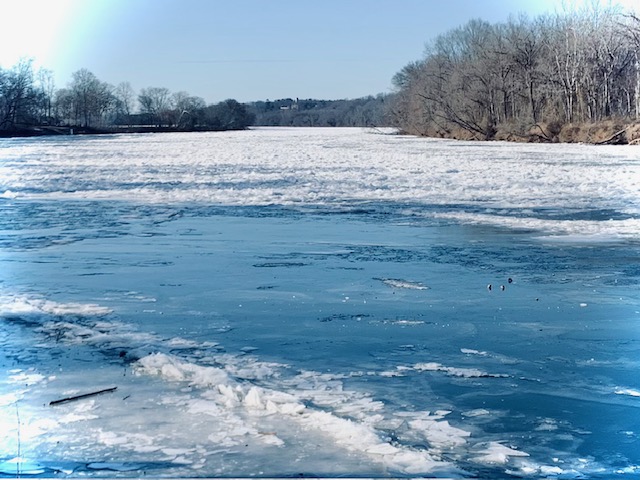
Image description – The sun is shining on a partially frozen section of the James River. Sections of ice are thick in outer areas and broken and thin towards the middle.
I have to keep reminding myself that there’s always a light shining. Even when the sun sinks into the sky, the moon will still rise, and when clouds block her brilliance, there are still lighthouses on distant shores. And if we can hold out a little while longer, we’ll see the sparks of fireflies that risk their lives to light the night with the hope and truths that fuel our reason.
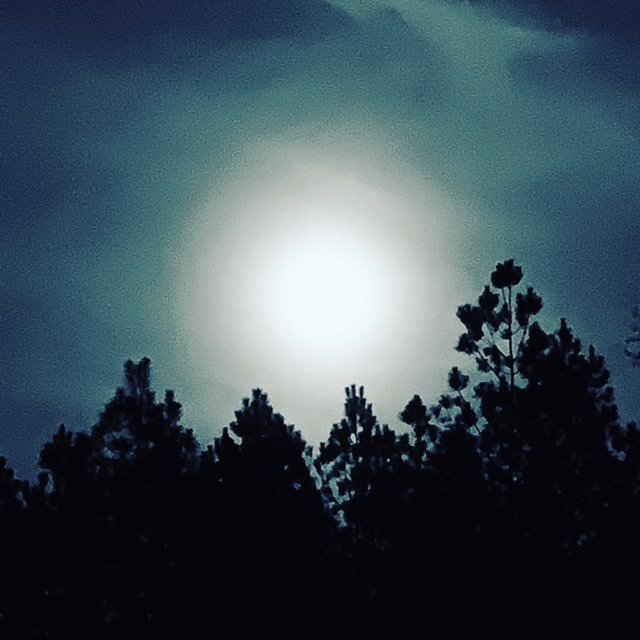
Image description – a photograph of the night sky. The moon is visible and shining bright above several trees.
The initial shock and numbness of the previous day has worn off and now, I’m livid. Now, I’m gathering strength and screaming the truth. Many rules aren’t created to keep us safe, rather, they’re passed by those in privilege and power to keep people quiet. Their main objective is to shut questions down and make it too hard, too dangerous, too costly to object. My voice gets louder every year. My teeth get sharper.
We have to come together in anger and find ways to tear down the system that tries to silence us. We can stand and hold signs, write and call lawmakers and demand they give us an audience. We can run for office in record numbers. We can write about the truth, whether in fiction, Fahrenheit 451 style, or as journalists reporting the truths we see. We can continue teaching our children to be decent human beings and we can reach out to people who need a hand. We have to fill the time and space with our presence and with our voices. We have to be unrelenting.
Competing strangers mow lawns and try not to drown
in rain that burns
and mortgages that sit like cinderblocks
on heavy chests
Keep moving in the circle
Don’t stop working
Don’t breathe
Don’t ask questions
The banks want you to hold on tight
to their dream that stops
everything from singing
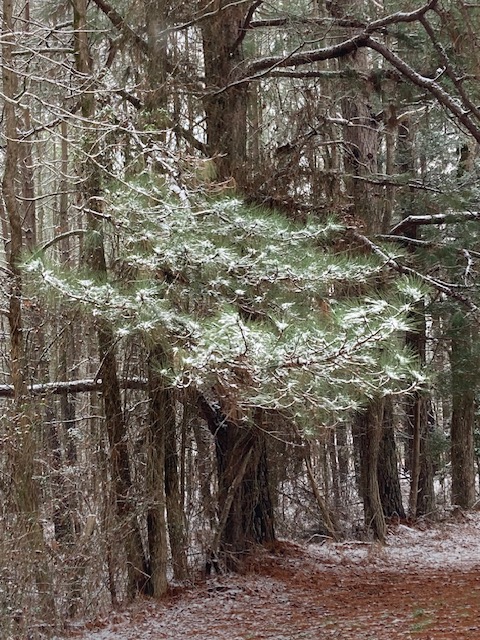
Image description – photograph of snowy forest of barren trees. In the center of the barren trees is one small, bright green tree.
The county where I live is becoming more and more overdeveloped. Each month, a new cluster of expensive houses, condos, and high rises appears. The amount of forestland and waterways that have been destroyed in the last ten years is astounding. The traffic is an ever-increasing nightmare, and the air isn’t fresh and crisp anymore. The haze of funk is spreading and thickening. It’s harder to breathe. There are shops everywhere but nothing good, or strange, or weird, or unusually fun, just phone stores, vape shops, coffee places, and chain restaurants- the same old thing up and down the main road.
Did we really need more of the same? Was this necessary? Was it a good idea? I guess it was for the banks and real estate developers, but there are so many other ways to increase revenue to a county or city. There were other options. One of the best options, of course not the most beneficial to developers, would have been to help the people who were struggling with employment and with home maintenance and with feeding their families- on a scope beyond just the basic crumbs that barely suffice. When people are able to do more than just barely survive, when they have hope, there’s prosperity within the community. I guess it’s just cheaper and easier to ignore the people who need help and ignore the people who could use a few steps up the ladder to lift themselves into better circumstances, and to build new, expensive homes instead.
The people living in those new, high-end homes have their own share of problems. Some live in constant fear of losing what they have so they spend their lives working but not living. Others have so much, they forget to see and care about the struggles that people below their income bracket face, and instead become the monsters that eat the rivers and pour concrete over the truth.